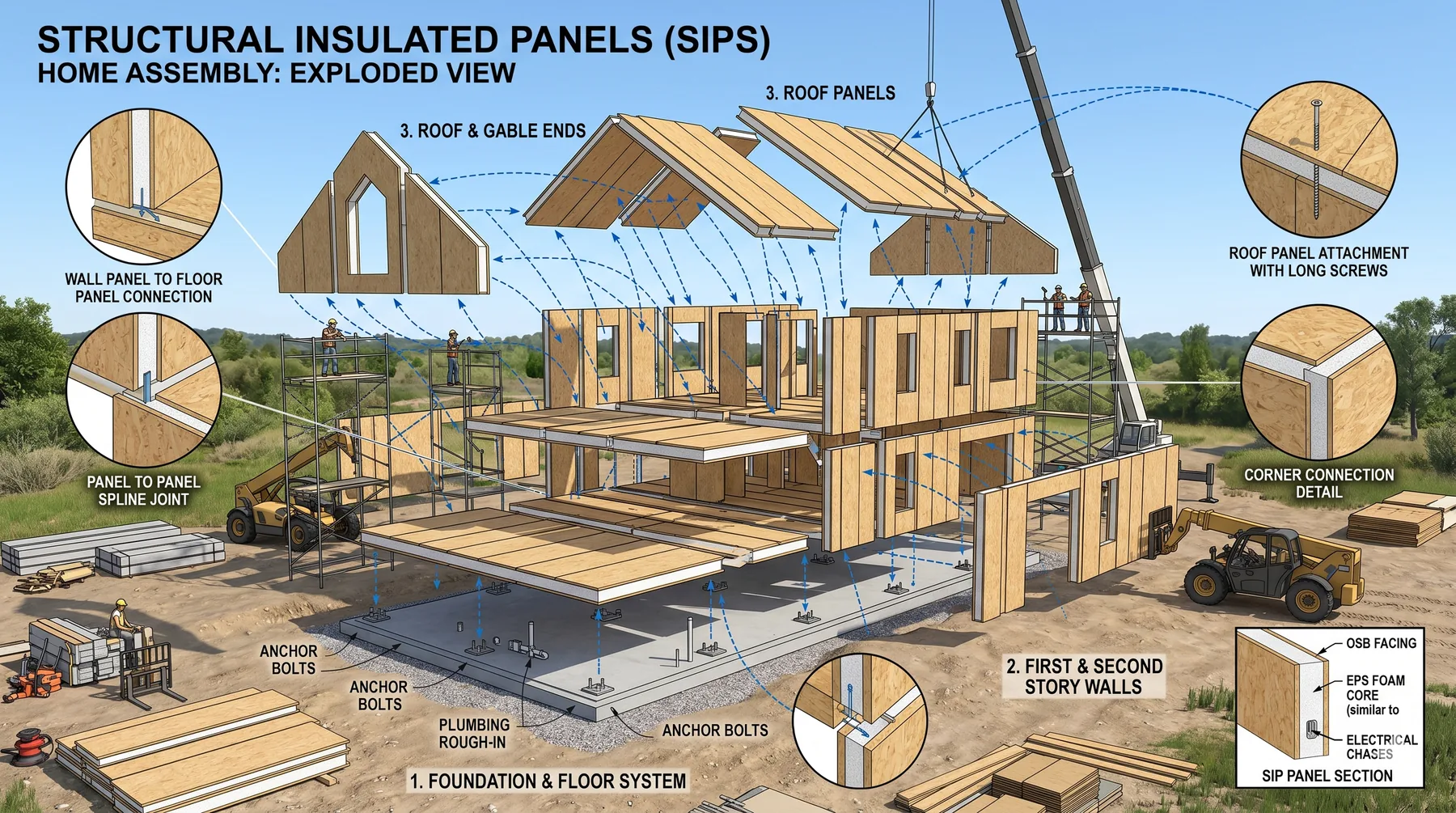
A structural insulated panel is a single engineered sandwich: a thick foam core bonded between two structural skins. It replaces studs, sheathing, and batt insulation with one continuous, factory-made component. That one change improves almost everything downstream.
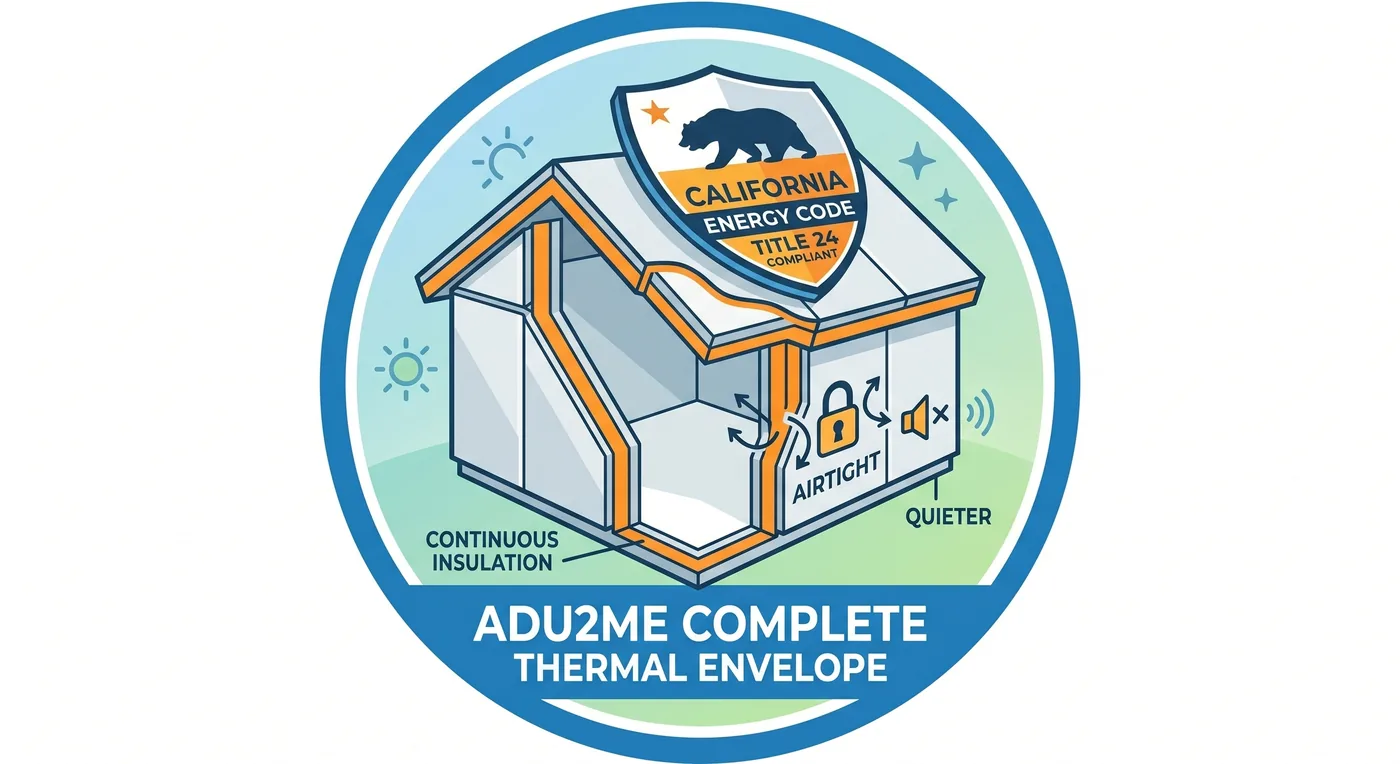
A continuous foam core means far less thermal bridging and air leakage than a stick-framed wall. The result is lower heating and cooling bills and a home that holds temperature.
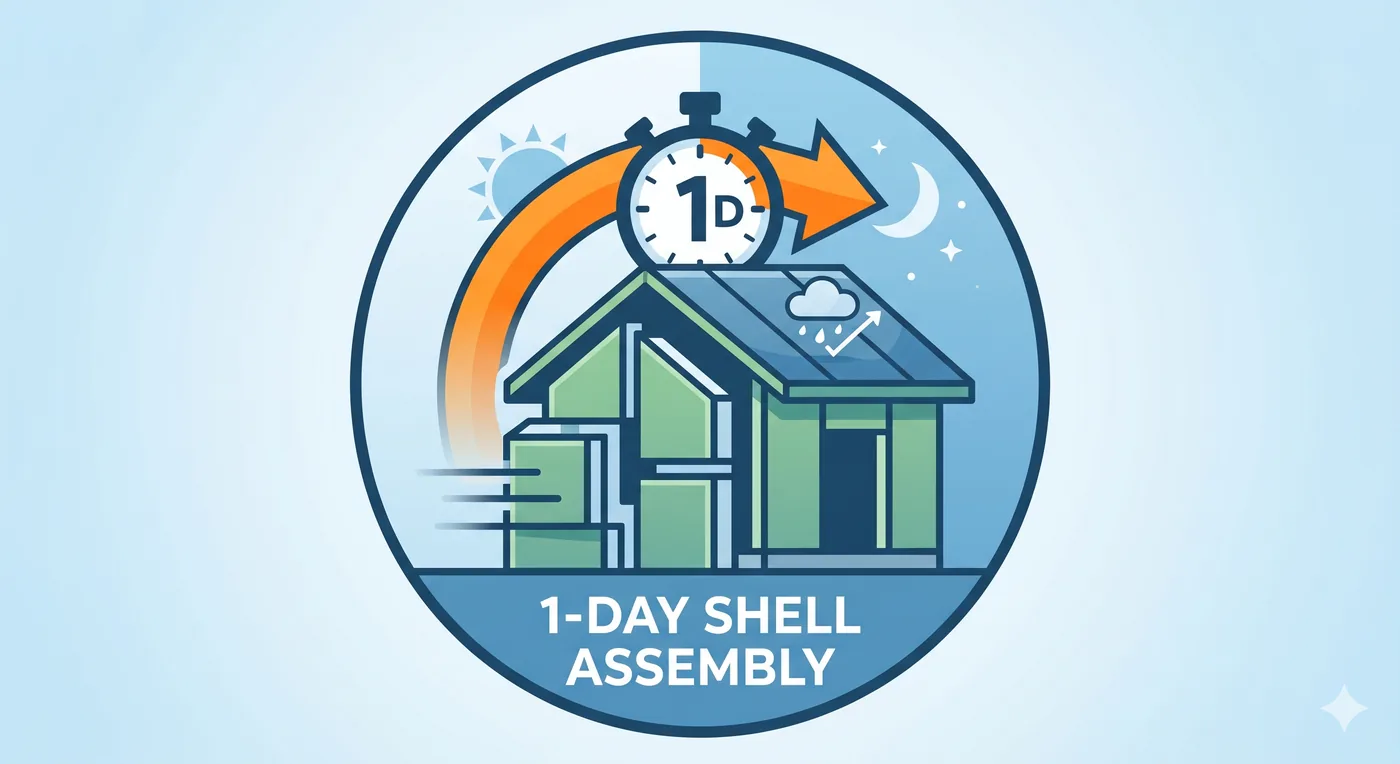
Panels arrive numbered and ready to set. The structural shell goes up in days, shrinking the most weather-exposed, labor-intensive part of a build.
Framing, sheathing, and insulation collapse into one delivered product, which means fewer hand-offs, fewer site errors, and a more predictable schedule.
SIPs carry load across the whole panel. Premier's panels are ICC-ES listed and tested for wildland-urban-interface and seismic conditions common in Southern California.
The solid core dampens sound, so an ADU near a street, alley, or main house stays noticeably quieter than a hollow stud wall.
Panels are cut to plan in the factory. When models are dimensioned to whole SIP modules, on-site offcuts and dumpster waste drop sharply.
We build every ADU2Me model on panels from Premier SIPS, our sole-source manufacturer for Southern California. It is not a commodity choice; it is the foundation of what we can promise on quality and code.
California sizes required solar by floor area and climate zone. Smaller ADUs often fall under the 1.8 kW exemption and need no solar at all. Check where each package lands in your zone.
Select your project's California climate zone to see the Title 24 required solar PV size for each ADU2Me package (per 2022 Energy Code, Equation 7-1). Systems below 1.8 kW qualify for Exception 2 — no solar required.
SIPs advantage: The numbers above use the prescriptive formula — floor area and climate zone only. Check Simulate SIPs performance path above to see an estimated reduction based on the SIPs envelope advantage. Actual results require certification by a licensed Title 24 energy consultant.
Based on California Title 24 (2022 Energy Code) Table 7-1 & Equation 7-1. Formula: kW = (conditioned sq ft × A) ÷ 1,000 + B. Exemption if < 1.8 kW (Exception 2) or roof solar access < 80 contiguous sq ft (Exception 1). Consult a licensed Title 24 energy consultant for your specific project and jurisdiction. SIPs performance estimate based on envelope efficiency advantages of structural insulated panel construction.